

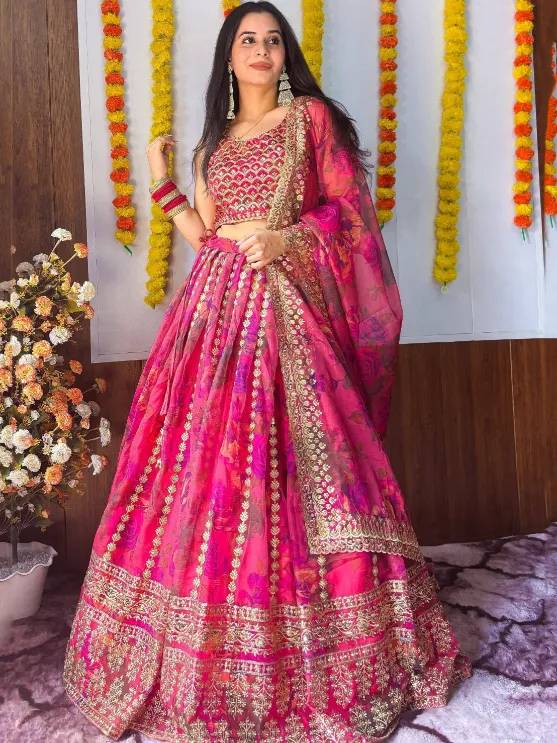
A coordinated bridal party looks polished in photographs, but matching every person from head to toe can make the styling feel too rigid. A bridesmaid lehenga works best when it connects with the wedding palette while still leaving room for individual comfort and personality.
The aim should be visual harmony rather than exact duplication. Colour families, similar fabrics, or shared design details can unite the group without requiring everyone to wear precisely the same outfit.
Start With the Wedding Palette
Before choosing lehengas, look at the bride’s outfit, venue, décor, and time of the ceremony. Bridesmaid colours should complement these elements without blending into the bridal look.
Day weddings often work beautifully with pastels, dusty tones, soft greens, blues, or warm neutrals. Evening celebrations can carry deeper colours such as wine, navy, emerald, plum, or maroon.
The bride’s colour should remain visually distinct.
Coordinate Through Details, Not Exact Copies
A bridal party can look connected even when everyone wears a slightly different design. One common colour or embroidery style is often enough to create consistency.
Useful ways to coordinate include:
-
Keeping skirts within the same colour family
-
Using similar embroidery or border details
-
Choosing one jewellery metal for the group
-
Repeating a dupatta colour across different outfits
-
Allowing different blouse necklines and sleeve lengths
-
Using similar fabric types while varying silhouettes
This approach also makes the outfits more wearable after the wedding.
Prioritise Comfort for Long Wedding Hours
Bridesmaids often have more responsibilities than regular guests. They may help the bride, move between venues, manage photographs, participate in ceremonies, and spend plenty of time standing.
A very heavy skirt or restrictive blouse can become difficult after several hours. Look for manageable flare, comfortable lining, secure closures, and enough movement through the shoulders.
Footwear should also be tested before the wedding. Comfortable block heels, wedges, juttis, or embellished flats may be more practical than shoes chosen purely for height.
Use Navy for an Evening Bridal Party
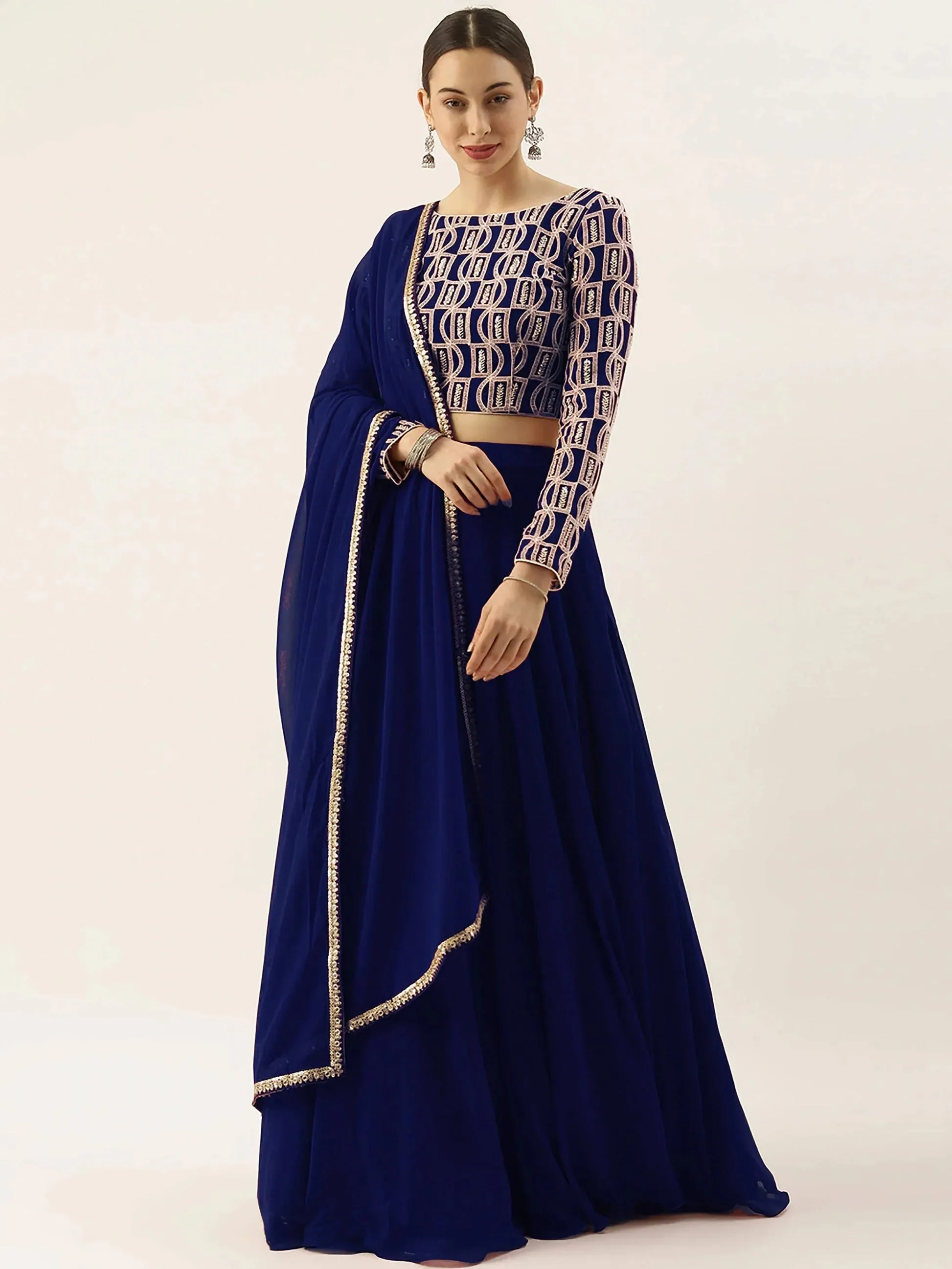
A navy blue lehenga choli can be an effective choice for receptions, sangeet nights, and evening ceremonies because the deep shade provides formality without relying on black.
Navy also pairs with several types of embellishment. Gold can create a warmer traditional look, while silver, sequins, or cooler stonework give the colour a more contemporary finish.
For a bridal party, different women could wear variations of navy while keeping one element consistent. One may choose a sleeved blouse, another a simpler neckline, and another a different dupatta drape while the overall palette remains connected.
Give Everyone Some Styling Freedom
Body shape, comfort preferences, and personal style differ, so a single blouse design may not suit an entire group. Giving bridesmaids controlled choices often produces a more confident final look.
You could keep the skirt and colour consistent while allowing options such as:
-
Short, elbow-length, or full sleeves
-
High, round, square, or V-shaped necklines
-
Dupatta draped over one shoulder or across the front
-
Statement earrings or a lighter necklace
-
Hair worn in buns, braids, or soft waves
Setting two or three shared styling rules is usually enough to maintain coordination.
Think About the Photographs as a Group
Bridesmaid outfits are often seen together in photographs, so colour balance matters. If everyone wears the same dark shade, lighter dupattas, metallic details, or jewellery can stop the group from appearing visually flat.
Consider how the colours will look beside the bride. Bridesmaids should frame the bridal outfit rather than compete with it.
It can help to photograph fabric swatches together before ordering. A quick phone photo can reveal whether two shades that look similar individually actually clash when placed side by side.
Plan for Rewearing After the Wedding
Bridesmaid clothing has more value when it can be styled again. Instead of selecting a design tied closely to one wedding theme, consider whether the skirt, blouse, or dupatta can work separately later.
The blouse might pair with a saree, while the skirt could be worn with a simpler top for another festive function. A versatile dupatta can also refresh an existing salwar suit or lehenga.
This makes coordinated wedding dressing more practical without reducing its visual impact.
Do One Group Check Before the Event
If possible, bridesmaids should try their complete looks before the wedding. This does not require everyone to meet for a formal fitting, but sharing full-length photographs can help identify obvious styling differences.
Check footwear height, blouse proportions, dupatta drapes, jewellery, and overall colour balance.
Small adjustments made early can create a much more cohesive group appearance.
Final Thoughts
A well-dressed bridal party does not need identical outfits. The strongest coordination comes from shared colours, thoughtful details, and a few consistent styling choices while allowing each bridesmaid enough freedom to feel comfortable.
By balancing the wedding palette with practical fit, group photographs, and future wearability, bridesmaid styling can feel organised without becoming uniform. The result is a bridal party that looks connected while still allowing every member to retain her individual style.