

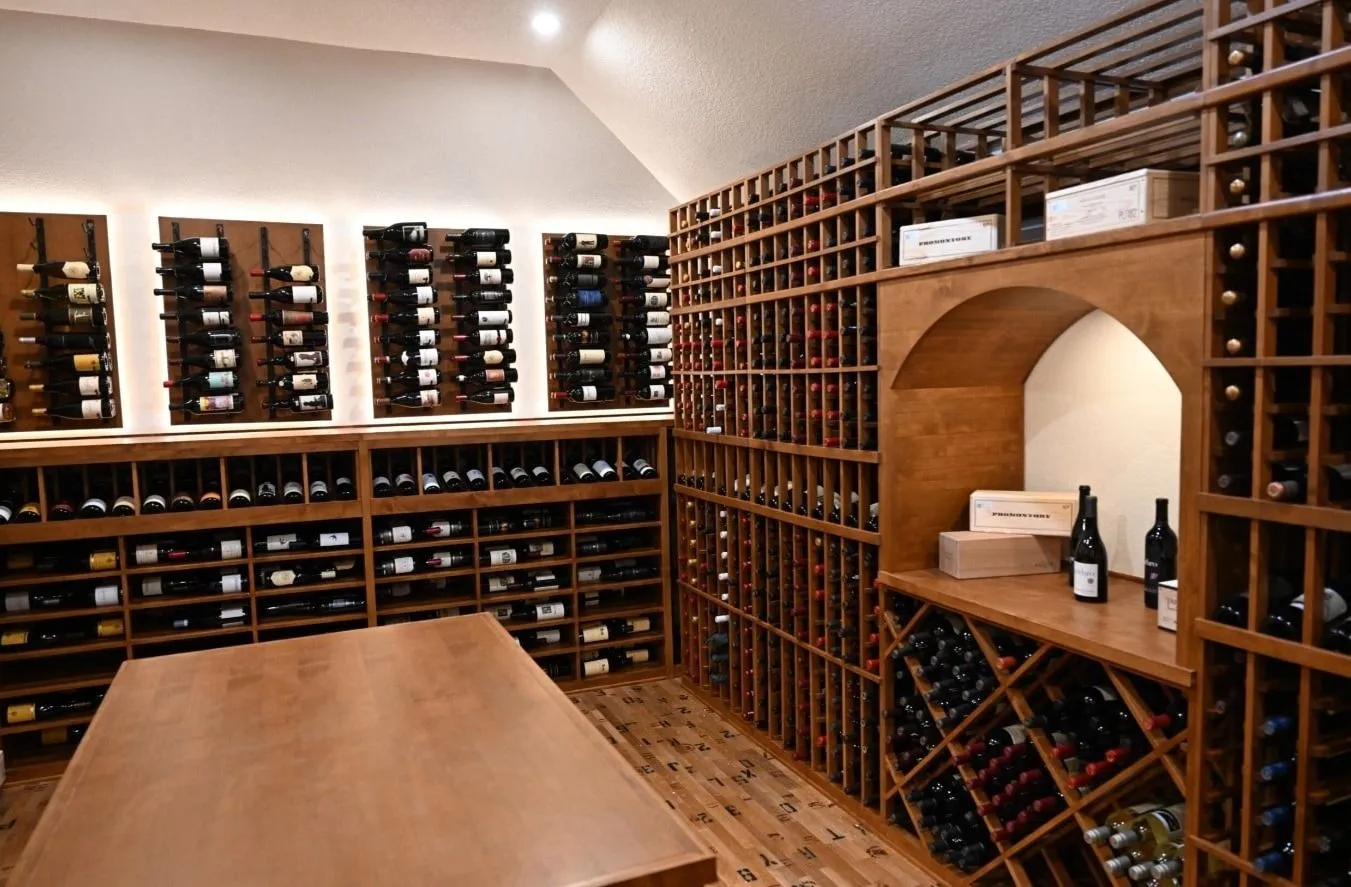
Racking is the part of a cellar you touch every time you reach for a bottle, so it deserves more thought than it usually gets. Well-planned custom wine cellar racks hold your wine securely, suit your habits and set the visual tone for the entire room. Here’s how the main materials compare in real, everyday use, with the tradeoffs spelled out honestly.
Wood: Warm and Familiar
Wood is the traditional choice, and for good reason. Mahogany, alder and walnut each bring a different grain and color, and all of them develop a soft, lived-in character as the years go by and the finish deepens. A wooden wall feels like part of the house, not an appliance.
Moisture is the thing to watch. Quality timber is sealed and finished for cellar humidity, so it doesn’t swell or twist. Unfinished lumber from a hardware store rarely lasts, and it can stain labels or leave a smell around the cork, so it’s worth paying for material that was actually prepared for the job. Wood also softens echoes, which suits quieter rooms.
Metal: Thin Lines and a Cleaner Look
A luxury wine cellar often leans on metal when the goal is a lighter, more contemporary feel. Stainless steel and powder-coated steel make slim frames that let the bottles, not the shelves, grab the eye as you walk in, and the structure almost disappears behind the glass and labels.
Metal also stands up well to humidity. Brushed finishes hide fingerprints, and dark powder coats give a dramatic backdrop for labels. The tradeoff is a cooler visual temperature, so many owners pair metal with a wood accent for balance, perhaps a thick wooden shelf for tasting notes or a pair of display bottles. Metal can be cut to fit odd corners with remarkable precision.
Cable Systems: The Floating Look
Cable racking suspends bottles on thin stainless wires stretched between floor and ceiling. From a distance, the bottles seem to hover in mid-air, which is why the style is so popular in glass rooms and open living spaces where the collection is meant to be admired from several angles at once.
It’s best for display, not bulk storage. Each bottle sits at a slight angle with its label showing. Plan on a mix, using cable for favorites and a denser system for the everyday bottles that rotate in and out, so the showpiece wall never turns into a crowded, unfinished-looking storage area. Lighting behind the wires emphasizes the floating effect even more.
Matching Racks to Bottle Types
Standard Bordeaux bottles fit almost anywhere, but Burgundy, Champagne and magnums need larger openings. Build a few oversized slots from the start, because retrofitting them later costs more and often means taking the surrounding shelving apart, which nobody enjoys when the cellar is already stocked and in use.
Think about access as well. If you pour from the cellar often, keep the daily drinkers at hand height. Reserve the highest and lowest positions for bottles you’re aging for the long haul and don’t expect to touch for years, and group them by region or vintage so you can find them without guessing. Small tags or notes speed up every search for a specific bottle.
Stability and Weight
A full case of wine is heavy, and a loaded wall adds up fast. Racks need solid anchoring into studs or masonry, and shelves should be rated for the load they’ll carry. A slight wobble today turns into a visible sag in five years, and a collapsing shelf is a costly and heartbreaking way to learn the lesson.
Ask how joints are made and how fasteners are hidden. Tight joinery and concealed hardware look better and last longer than quick screws and brackets. A rack that feels rock solid when you push against it is a good sign, and a builder who invites you to test it is usually confident in the work. Always ask what load the shelves were tested to carry.
Final Thoughts
There’s no single best material, only the best match for your room, your collection and your taste. Talking it through with the people at customwinecellar.com helps turn loose preferences into a workable layout that you’ll enjoy using, and it lets you see how different finishes look together before anything is cut.
Whatever you choose, build it to carry weight and resist moisture. Good racking will outlast passing trends and keep serving you for decades, quietly doing its job while the bottles inside get better with every passing year, and while your own collecting habits slowly change and grow.